
Just Dubai-it
A great nation brand isn't a slogan. It's being clear about who it is and what it represents, and then being just that. The UAE gets it. We can too.

I have a soft spot for countries that manage their nation brand well.
Not because I confuse branding with slogans - I don’t. And not because I think reputation can cover over reality - it can’t. At least not for long. But because when a country knows who it is, what it offers, and how it wants to be experienced by the world, something shifts. The work becomes less defensive, frantic, less about correcting every false impression. More about behaving consistently enough that the story becomes hard to miss.
That is why I have always loved New Zealand brand management.
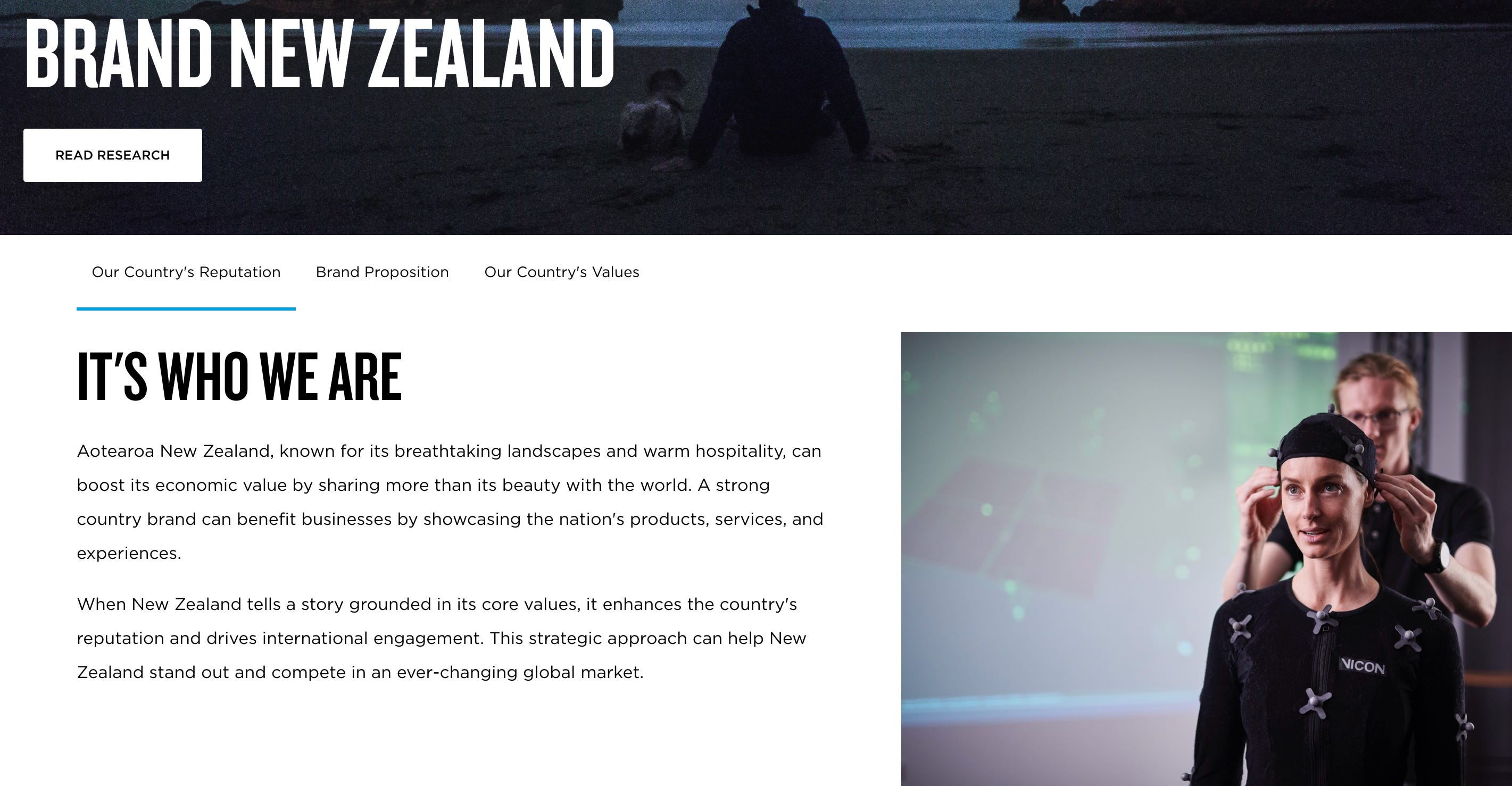
New Zealand doesn’t just say, “Come see our landscapes” or “Buy our quality products.” It manifests in myriad ways what New Zealand’s story is - a nation that has put at its core the care for people, connection to place, ingenuity, respect and integrity. Then, through its official nation brand agency - New Zealand Story - it gives its exporters, agencies and institutions a shared language and incentives to tell that story to the world.
That is nation branding done seriously.
And in recent years, the UAE, and especially Dubai, has become one of the most disciplined actors in this space.
The new “Dubai-it” campaign is a perfect example.
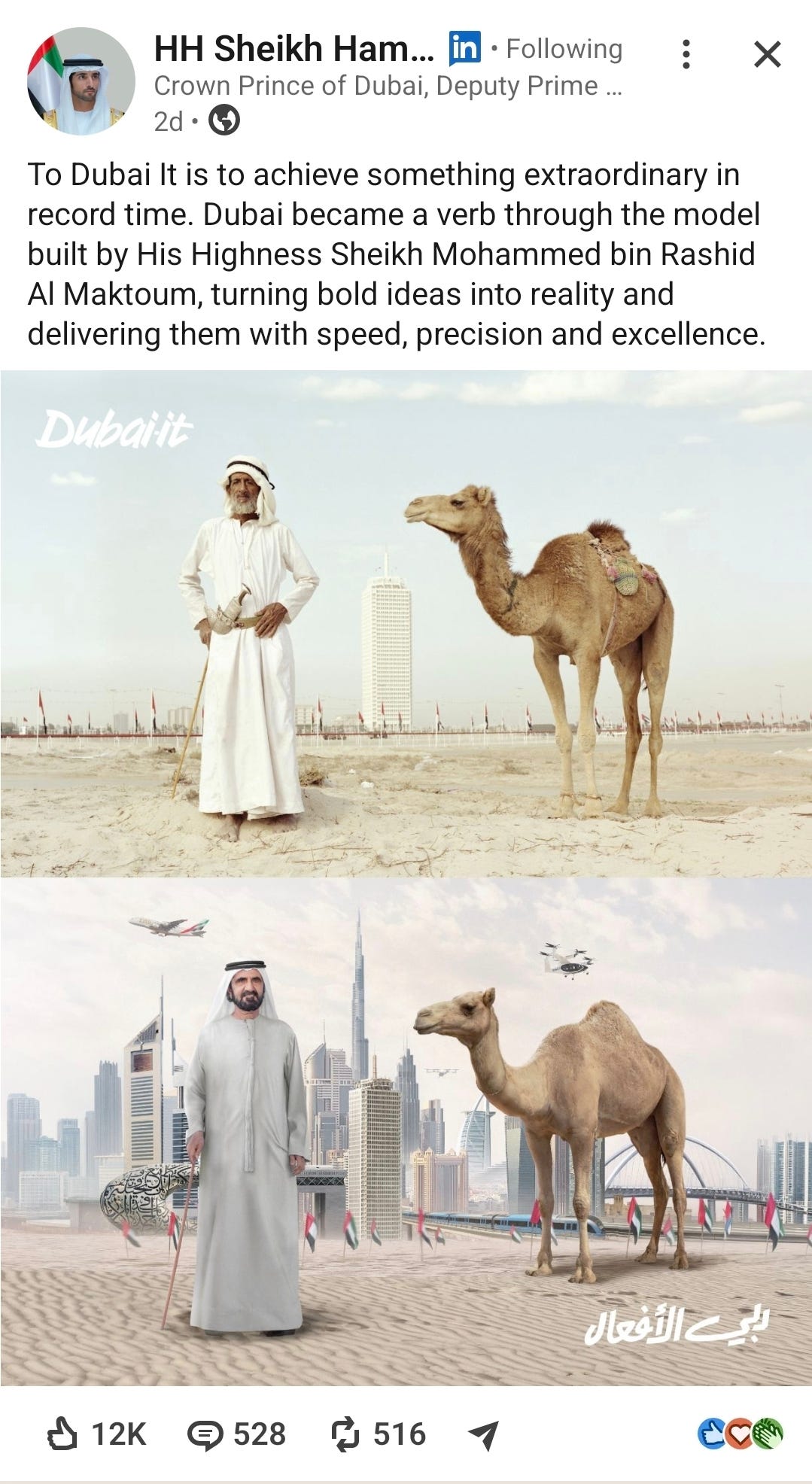
The idea is simple: to “Dubai-it” means to take an ambitious idea and execute it with speed, quality and visible results.
That’s not just a campaign line. It is a national operating system translated into a public story: Dubai is not asking the world to admire it because it explains itself well. It’s not doing “Hasbara”, as we call it in Israel. It’s saying, through this brilliant campaign: “Look at what we build, how fast we move, how high we set the bar, and how seriously we take execution. This is what we’re about, and we welcome you to share it with us.”
What’s even more incredible is how its business sector is taking on the slogan and making it their own, for example the Emirates’ campaign, and that of The Giving Movement, a clothing brand based in Dubai:
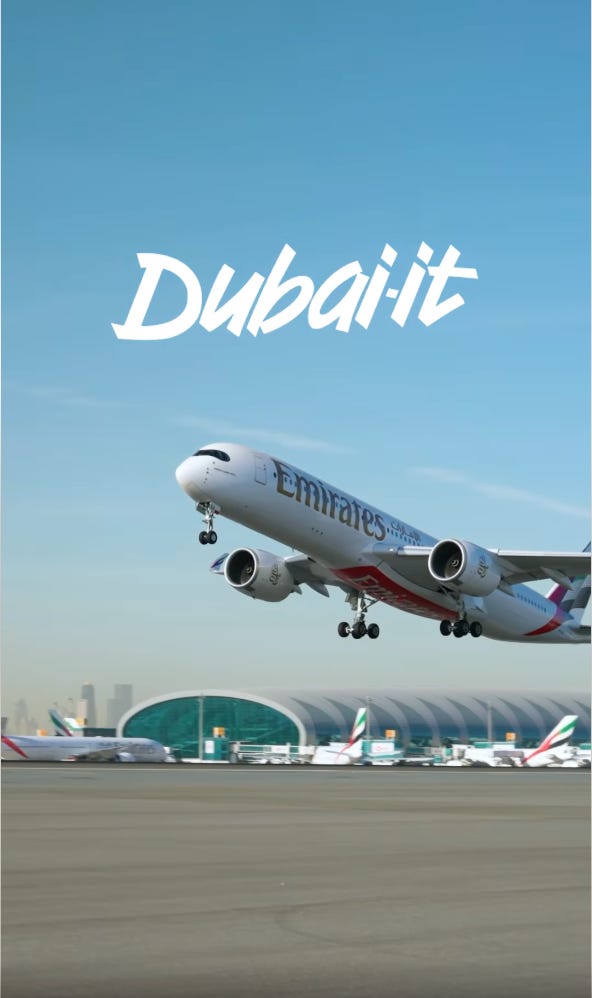
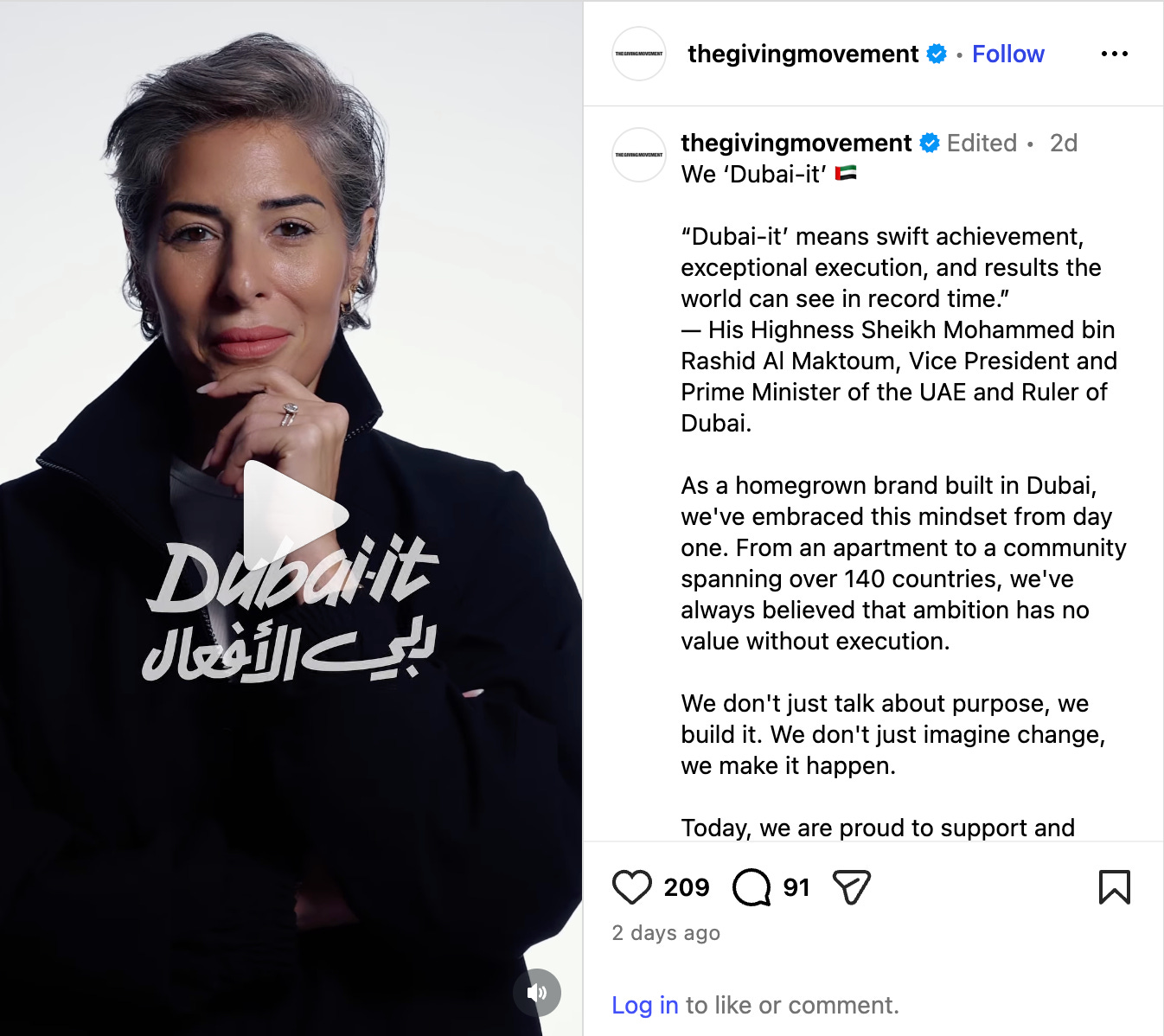
Their message is: Dubai is where you get high quality stuff done quickly. Dubai itself is testament to that, so we’re proud to be Dubai-based. This is a message being echoed by Dubai Health other public-facing services. Proper public-private national storytelling - what a delight!
You don’t have to love every part of the Dubai model to understand the reputational intelligence behind it. The bottom line is this: they know what they’re about. And because they know what they’re about, they know what to do and how to manifest their brand in behavior.
This matters most when things are not going well.
During the recent regional war, when airspace was closing, flights were cancelled, and missiles and drones were being intercepted over the Gulf, the UAE faced a reputational test it didn’t choose and its local infrastructure wasn’t prepared for.
It could have gone quiet. Or panicked. It could have allowed the crisis to define the country. Instead, it did something smarter: it behaved like the country it claims to be. They respond quickly, and with quality offerings.
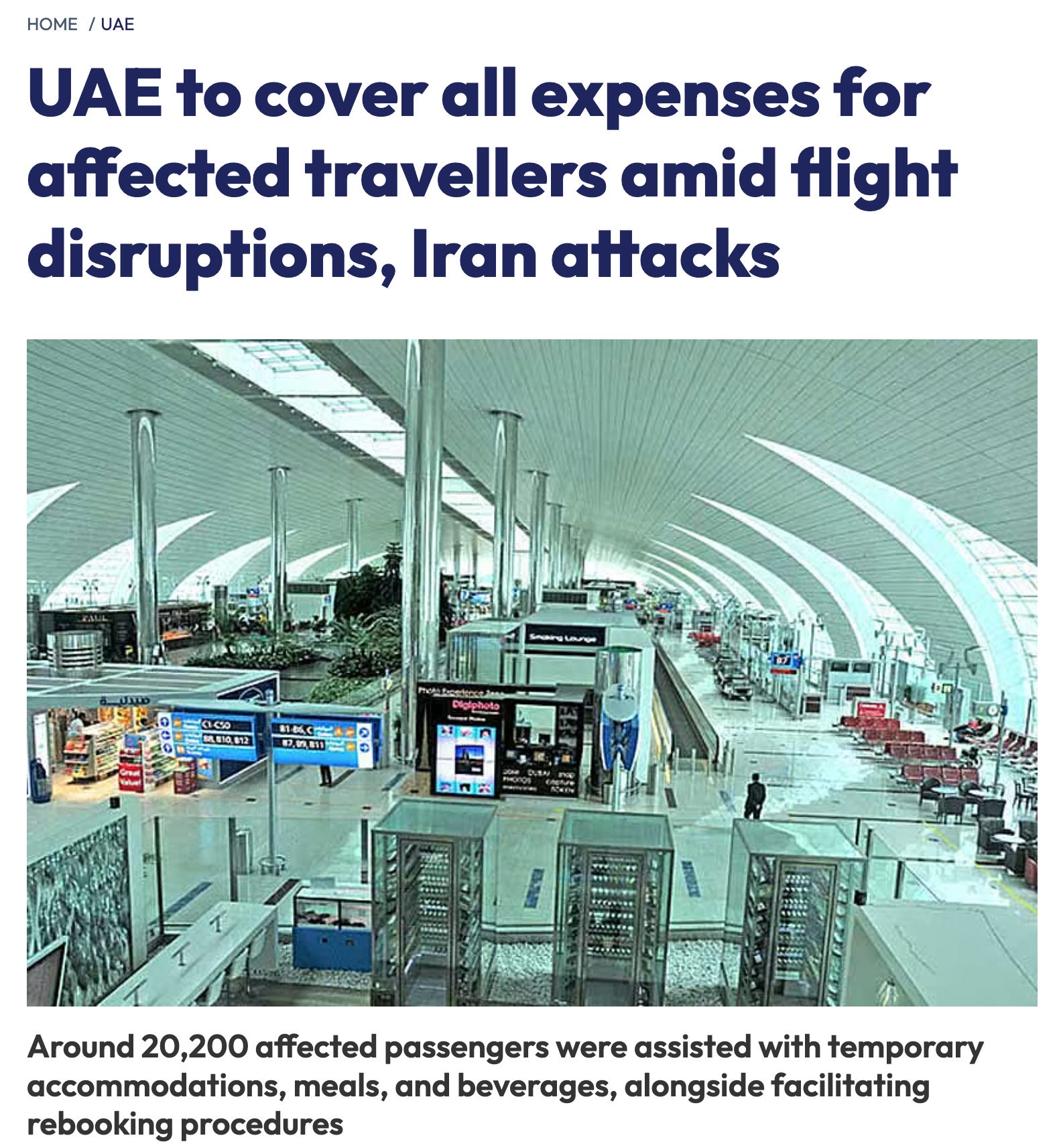
Authorities worked with hotels to extend stays for stranded tourists. In Abu Dhabi, officials explicitly covered extended accommodation costs for guests who could not leave. Dubai’s tourism authorities coordinated with hotels to support affected visitors and emphasized care, service standards and public-private coordination.
That is not “messaging.” That is reputation management through behavior. The signal was clear: yes, this crisis is happening around us. No, it is not who we are. And while you are here, you will be looked after. Care for its people and hospitality is another key feature of the UAE brand.
That is how a country protects future desire. Because wars end. Flights resume. Tourists choose again. And when they do, they remember how a place made them feel when things went wrong.
There’s a lesson here for Israel. And no, it’s not that it has to become Dubai. We are a different country, with a different history, different constraints, different political culture, and a very different security reality. Apples shouldn’t be compared with oranges.
But Israel needs to start accepting that reputation is not managed by explaining itself harder; it’s managed by knowing your story (before a crisis hits), building the systems to express it, and behaving in ways that prove it, especially during crisis.
So the question is not: how do we explain Israel better?
The real question is: what do we want the world to experience as true about us, and are we organized enough to spread that message far and wide so the world rediscovers who we really are?
Unfortunately, neither question is rhetorical and as of writing this article, the jury is out on the first, and the answer is a resounding no to the second. Clearly. But never say never - it’s up to us to demand that changes be made and that’s what I’m working on at the Reputational Security Lab at Reichman University.
Stay tuned…
Great article. Yes, it is a delight to see nations manage their stories so well ... and then it is especially frustrating to compare those situations to Israel's, where the country makes every branding/reputational mistake possible, through both words and actions. Your two questions: 1) what do we want the world to experience as true about us, and 2) are we organized enough to spread that message far and wide so the world rediscovers who we really are ... are critical, and I'm sure you're focused on them at the RSL. What are your comments on the Israel video you included?
Convincing text and examles. Is the intriguing video a suggestion for Israel's new branding?